MAHE welding processes
MIG/MAG pulse, double pulse and TIG explained: operating principles, applications and the settings that make a difference.
MIG/MAG
MIG/MAG pulse
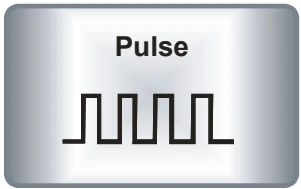
Background current and current pulses control transfer of the melting wire.
Principle & application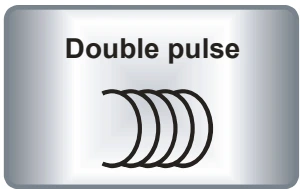
HyperSpeedPuls
A pulse function in the HyperMIG range for the specific production task.
Principle & application
HyperForce
Concentrated MIG/MAG arc for welding tasks requiring greater penetration.
Principle & application
TIG
TIG LF pulse
Slower current changes make melting and cooling phases clearly recognisable.
Principle & application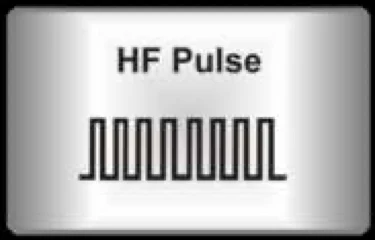
TIG AC/DC
Direct current for many steels; alternating current for typical aluminium applications.
Principle & application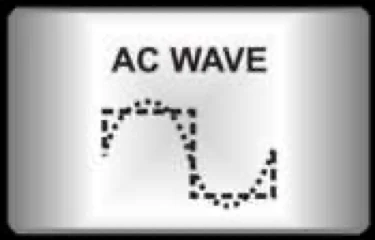

HyperSpot and ActiveSpot
Spot and tacking functions support recurring short welds.
Principle & applicationSupporting equipment functions
ActiveBoost
Supporting equipment function, not a separate pulse or welding process.
Principle & applicationFrom a process name to the right welding task
MIG/MAG uses a consumable wire electrode; TIG uses a non-consumable tungsten electrode. The explanations below show which parameter a program changes, where it is used and what matters when setting it up. Pulse, double pulse, AC frequency and HF ignition serve different purposes.
The specific version matters: range, control panel, software and activated characteristic determine the available functions. The linked equipment is provided for comparison; not every version includes every function explained here.
Pulse modes compared
On small screens, scroll the table horizontally.
| Function | What changes? | What does it affect? |
|---|---|---|
| MIG/MAG pulse | Short current peaks above a background current | Controlled droplet transfer from the wire |
| Double pulse | A slower power rhythm in addition to MIG pulse | Pool movement and a regular weld ripple pattern |
| TIG LF pulse | Clearly perceptible alternation of pulse and base current | Manual pool control and rhythm of filler addition |
| TIG HF pulse | Rapid changes in welding current during the weld | Arc concentration and pool behaviour |
| AC frequency / balance | Polarity cycles / proportion of electrode-positive and electrode-negative time | AC arc character / cleaning and electrode loading |
| HF ignition | Contactless arc starting | Starting, rather than the pulse sequence during welding |
MIG/MAG · wire, metal transfer and pool control
MIG uses inert shielding gas and MAG uses active shielding gas. A continuously fed wire melts in the arc. Shielding gas, wire diameter and material characteristic are selected together. The programs differ in how they control metal transfer, arc pressure or alternating power phases.
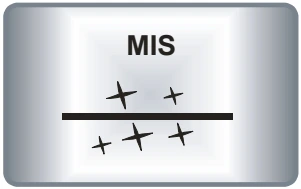
MIS · controlled standard arc
Low-spatter MIG/MAG arc for everyday workshop use.
Principle and effect
MAHE uses MIS to mean Multi-Induction System. The control system influences arc behaviour and metal transfer to reduce spatter and subsequent cleaning. MIS is a MIG/MAG characteristic; it is neither a TIG process nor automatically a pulse program.
Typical application
General fabrication, repairs and site work where a manageable arc and limited finishing work are required. The appropriate characteristic depends on the wire, gas and material.
What matters when setting up
Adjust wire feed, arc length and dynamics on a test piece. Clean contact surfaces, consistent wire feeding and suitable gas coverage remain essential; even a controlled arc is not spatter-free under all conditions.
Equipment to compare
MIG/MAG pulse · controlled droplet transfer
Background current and current pulses control transfer of the melting wire.
Principle and effect
A background current maintains the arc while short current peaks assist droplet detachment. With suitable adjustment, regular transfer with few short circuits is possible. The power source coordinates pulse shape and wire feed through the selected synergic characteristic.
Typical application
Aluminium, stainless steel and steel with an appropriate wire/gas program. Useful for varying welding positions and where less spatter than conventional transfer is required.
What matters when setting up
First select the correct material, wire diameter and shielding gas, then adjust wire feed and arc correction. A pulse characteristic does not replace joint preparation or checks of penetration and sidewall fusion.
Equipment to compare
Double pulse · two superimposed rhythms
A slower power variation is superimposed on the MIG/MAG pulse.
Principle and effect
In addition to the fast pulses controlling droplet transfer, phases of higher and lower power alternate. This slower rhythm affects weld pool movement and the ripple pattern. It can produce a regular, TIG-like surface while still welding with a consumable wire electrode.
Typical application
Particularly for visible aluminium welds and recurring components where a consistent weld appearance matters. The approved characteristic still determines which materials and wires are supported.
What matters when setting up
Coordinate double-pulse frequency, power difference and travel speed. Moving too slowly can introduce considerable heat despite pulsing. A regular ripple pattern alone does not prove sufficient penetration or a defect-free weld.
Equipment to compare
HyperPuls · MAHE dynamic pulsed arc
MAHE process for productive pulse welding with a controllable arc.
Principle and effect
HyperPuls is a manufacturer-specific MIG/MAG pulse control process. MAHE describes it for fast welding and multipass work. Deposition rate and travel speed must be matched to achieve the required weld geometry and sidewall fusion.
Typical application
Production welds and multipass joints with a suitable characteristic, particularly where process control needs further adjustment beyond a standard pulse program.
What matters when setting up
Actual speed, distortion and interpass temperature depend on the component. HyperPuls and double pulse are different functions; the exact combination and availability must be checked at the control panel.
Equipment to compare
HyperSpeedPuls · pulse function for production
A pulse function in the HyperMIG range for the specific production task.
Principle and effect
MAHE lists HyperSpeedPuls in the equipment features of the HyperMIG X range. The function name alone is insufficient for selection: the available characteristic, material and intended wire/gas combination are needed to establish the appropriate operating point.
Typical application
Recurring production welds for which a suitable HyperMIG pulse solution is to be assessed. A trial on the actual material shows whether speed, weld shape and spatter behaviour suit the task.
What matters when setting up
Check the panel, software version and activated program before selection. Compare travel speed, weld geometry, finishing work and component temperature together during the trial. This establishes the benefit for the specific production process.
Equipment to compare
HyperForce · penetration and arc pressure
Concentrated MIG/MAG arc for welding tasks requiring greater penetration.
Principle and effect
HyperForce focuses on a forceful arc and deep penetration. This is particularly relevant where reliable melting of the joint sidewalls is required. Whether joint preparation or the pass sequence can be changed must be established on the specific joint.
Typical application
Components requiring higher power and demanding joints, where material, position and characteristic are suitable. The process can provide an alternative to a less concentrated arc setting.
What matters when setting up
Torch angle, stick-out, travel speed and joint opening strongly influence the result. Deep penetration does not replace a qualified pass sequence; burn-through and excessive heat input must still be assessed.
Equipment to compare
HyperCold · controlled heat input
MAHE characteristic for heat-sensitive components and gap bridging.
Principle and effect
HyperCold is designed for controlled heat input and a manageable weld pool. MAHE particularly identifies gap-bridging tasks and root passes. Its benefit comes from the appropriate combination of characteristic, power and torch movement.
Typical application
Thinner or distortion-sensitive structures and joints with a controlled fit-up gap. Suitability is assessed against material, joint shape and thickness.
What matters when setting up
Reduced heat input must not result in a lack of sidewall fusion. Adjust power and speed so that both component edges melt reliably. A cooler setting guarantees neither distortion-free parts nor unlimited gap bridging.
Equipment to compare
HyperRoot · controlling the root pass
Task-specific MIG/MAG control for the joint root.
Principle and effect
In a root pass, the joint root and both sidewalls must melt without the pool falling through uncontrollably. HyperRoot is part of MAHE's Cold/Root functions. Root gap, root face thickness and accessible torch position are therefore considered together with the characteristic.
Typical application
First passes in suitable butt joints and tasks with varying access. The joint determines whether a reverse-side pass, backing or additional root protection is needed.
What matters when setting up
Establish the permitted gap range on a test piece and assess the weld underside. HyperRoot does not replace required back purging or weld inspection. The panel determines whether Root is available separately or within a combined function.
Equipment to compare
HyperUP · vertical-up welding
Alternating hot and cool phases for vertical-up welds.
Principle and effect
HyperUP automatically alternates between a higher-power phase and a cooler process phase. This supports weld pool formation and control during upward welding. MAHE describes vertical-up welds using straight travel rather than the usual weaving movement.
Typical application
Vertical welds requiring repeatable pool formation and consistent torch movement. The material and characteristic must suit the intended position.
What matters when setting up
Establish phase settings, weld cross-section and travel speed on a test piece. An excessively large pool can still sag with HyperUP. Availability depends on the panel and, where applicable, program activation.
Equipment to compare
TriArc · Cold, Root and Force combined
Dynamic characteristic with power-dependent arc behaviour.
Principle and effect
MAHE describes TriArc as a dynamic arc that uses Cold, Root or Force behaviour according to the selected power range. The three names refer to different priorities in process control, not three independent arcs operating simultaneously.
Typical application
Tasks using different power ranges within the intended characteristic. Component thickness, pass sequence and desired pool behaviour are considered together when selecting the process.
What matters when setting up
The available functions are checked on the specific power source and panel. TriArc does not imply automatic thickness detection or blanket approval for every welding task.
Equipment to compare
TwinArc · Cold and Root combined
Combined characteristic for heat-controlled tasks and root passes.
Principle and effect
According to MAHE, TwinArc combines Cold and Root behaviour depending on the power setting. It is a control function for a single arc. The name must not be equated with tandem welding using two wire electrodes melting simultaneously.
Typical application
Joints focused on manageable heat input and root pass formation. Application is defined through the available Cold/Root characteristic.
What matters when setting up
Gap, root face and travel speed remain operator settings. TwinArc is not the same as the HyperMIG TWIN equipment version with two wire feeders.
Equipment to compare
TIG · current waveform, polarity and precision
The tungsten electrode generates the arc; filler is added separately when needed. Pulse frequency, AC polarity changes and ignition method are independent functions. WIG and TIG refer to the same basic process.
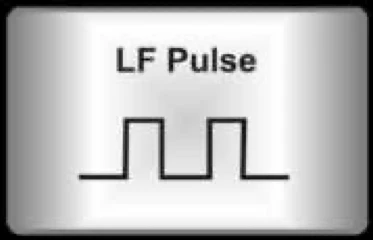
TIG LF pulse · controlling the pool rhythm
Slower current changes make melting and cooling phases clearly recognisable.
Principle and effect
In pulsed TIG welding, pulse current and base current alternate while the tungsten electrode remains non-consumable. At low pulse frequencies, the changes can guide pool control and rhythmic filler rod addition. MAHE describes LF pulse particularly for controlled pool handling and positional welding.
Typical application
Manual welds, heat-sensitive edges and positions where a manageable pool is helpful. Filler addition and hand movement are coordinated with the selected rhythm.
What matters when setting up
Set pulse current, base current, pulse duration ratio and frequency together. A high base current or long pulse duration can substantially increase average current. LF pulse is neither AC frequency nor a different ignition method.
Equipment to compare
TIG HF pulse · rapid current changes
Rapid current pulses influence arc concentration and stability.
Principle and effect
At higher pulse frequencies, current pulses follow too quickly to provide individual working rhythms for the hand. Instead, the setting influences arc focus and pool behaviour. HF pulse controls welding current during the weld; HF ignition provides contactless arc starting.
Typical application
Precision TIG welds and tasks requiring concentrated arc control. MAHE specifies pulsing up to 20 kHz for Beta DX pro and Omega AX pro; other equipment has its own specifications.
What matters when setting up
A higher frequency is not automatically a better setting. Pulse current, base current and pulse duration ratio must suit the joint. The syn versions with automatic pulse adjustment must not be equated with the manual functions of the pro panels.
Equipment to compare
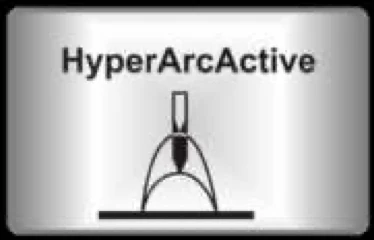
HyperArcActive · active arc control
MAHE control function to compensate for changing arc length.
Principle and effect
In manual TIG welding, variations in the electrode-to-workpiece distance change arc conditions. According to MAHE, HyperArcActive is designed to compensate for these length changes and provide more consistent heat input. It supports hand control rather than replacing it.
Typical application
Positional welding, difficult-to-access joints and varying torch distances. The function is particularly useful where maintaining a consistently short arc is difficult.
What matters when setting up
Electrode preparation, gas coverage and torch handling remain important. HyperArcActive is a control function, not a separate pulse program or automatic seam tracking.
Equipment to compare
TIG AC/DC · polarity and balance
Direct current for many steels; alternating current for typical aluminium applications.
Principle and effect
In conventional DC TIG welding, the electrode is negative. AC is often used for aluminium: the electrode-positive phase assists oxide cleaning, while the electrode-negative phase supports heat input into the workpiece. AC balance determines the ratio of these phases.
Typical application
DC for suitable steel and stainless steel joints; AC for many aluminium joints. Material condition, filler and surface preparation determine the specific process choice.
What matters when setting up
Balance and AC frequency are separate parameters: balance changes the phase ratio, while AC frequency changes the number of complete polarity cycles. Too much electrode-positive time increases tungsten loading. Balance displays vary by machine; do not transfer percentages without checking.
Equipment to compare
AC Wave · waveform and arc character
Sine, trapezoidal and square waveforms change AC arc behaviour.
Principle and effect
The waveform describes how current changes over time during the AC phases. MAHE lists sine, trapezoidal and square waveforms as selectable modulations. Different rates of current change alter arc character and noise; they must be considered separately from pulse frequency and AC balance.
Typical application
Adjusting the arc to the joint shape, desired weld width and personal torch handling during AC welding.
What matters when setting up
Check the available waveforms at the panel and change only one setting at a time. Waveform selection does not replace choosing the correct current range or preparing a clean aluminium surface.
Equipment to compare
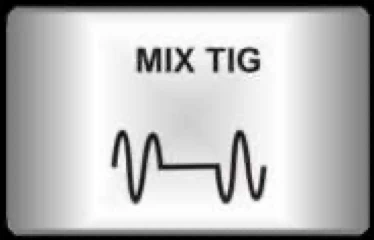
Mix TIG · combining AC and DC phases
Automatic alternation between AC and DC periods during TIG welding.
Principle and effect
Mix TIG combines AC periods with DC periods. This combines the cleaning action of AC with a different pattern of energy input during DC. MAHE particularly identifies this mode for aluminium in positional welding.
Typical application
Aluminium tasks requiring adjustment of the interaction between cleaning action, pool control and heat input.
What matters when setting up
The AC/DC proportions and their timing depend on the available program. Mix TIG differs from AC balance within a single AC cycle and requires an appropriately equipped AC/DC power source.
Equipment to compare
HyperSpot and ActiveSpot · controlled tacking
Spot and tacking functions support recurring short welds.
Principle and effect
HyperSpot is MAHE's function for localised TIG welds. ActiveSpot is additionally listed on HyperTIG AX and DX as a fast tacking function. Defined settings help position components for the subsequent weld; the two functions are distinguished at the respective panel.
Typical application
Tacks on sheet, assemblies and recurring joints where a consistent sequence of spots matters.
What matters when setting up
Match current, spot duration and cooling time to the material and joint gap. Gas pre-flow and post-flow also matter when tacking. These TIG functions are not resistance spot welding using electrode tongs.
Equipment to compare
Supporting equipment functions
Not every label on a panel denotes a separate welding process. Power reserve, synergic control and stored jobs assist operation and must be distinguished from the arc operating principle.
ActiveBoost · understanding the power reserve
Supporting equipment function, not a separate pulse or welding process.
Principle and effect
MAHE describes ActiveBoost as a selectable power reserve related to available mains power and fuse protection. The function concerns power delivery by the power source and must be distinguished from arc programs such as LF pulse, HF pulse or Mix TIG.
Typical application
Tasks with temporarily increased power demand on appropriately equipped Beta DX or Omega AX versions.
What matters when setting up
Select the mains connection, fuse protection, supply cable and duty cycle according to the equipment documentation. ActiveBoost permits neither an unchecked increase in fuse rating nor unlimited continuous power.
Equipment to compare
Key adjustment parameters
- Pulse current and base current
- Pulse current provides the higher power of the melting phase. In pulsed TIG, the lower base current maintains the arc between pulses. Together, they influence average current.
- Pulse frequency · Hz and kHz
- Frequency counts complete pulse cycles per second. 1 kHz equals 1000 Hz. A higher value means more current cycles, not automatically a higher deposition rate or a better weld.
- Pulse duration ratio · pulse duty cycle
- The pulse duration ratio indicates how long the high current is applied within a pulse cycle. It must be distinguished from the power source duty cycle, which describes the equipment's thermal capacity at a stated welding current.
- Wire feed and arc correction
- In synergic MIG/MAG, characteristics coordinate power source parameters with wire feed. Arc correction adjusts the operating point further. Wire speed and travel speed along the workpiece are different parameters.
- AC balance and AC frequency
- Balance allocates time between electrode-positive and electrode-negative phases. AC frequency determines how often complete polarity cycles repeat. Both settings are separate from pulse frequency and HF ignition.
- Heat input and travel speed
- Current, voltage and time per unit weld length act together. Slow travel can introduce considerable heat even with low pulse settings. Pulse frequency alone describes neither heat input nor expected distortion.
- Synergic control, Autopulse and JOB memory
- Synergic control links several settings to a preselected operating point. With Autopulse, the machine adjusts pulsing within the intended program. A JOB stores a parameter set for recurring tasks; its suitability must still be checked for the component and material.
Frequently asked questions about pulse and process selection
What is the difference between MIG/MAG pulse and double pulse?
In pulsed MIG/MAG, current pulses control droplet transfer. Double pulse adds a slower alternation between power phases that affects pool movement and the weld ripple pattern. A TIG-like surface does not turn the weld into a TIG weld.
Are HF pulse and HF ignition the same function?
No. HF ignition starts the arc without contact. HF pulse changes the welding current during the weld. Equipment can have HF ignition without offering a corresponding high-frequency pulse range.
Can every MAHE TIG machine pulse at 20 kHz?
No. MAHE specifies up to 20 kHz for Beta DX pro and Omega AX pro. The syn versions use automatic pulse adjustment; other ranges have their own functions and adjustment ranges. Check the model, panel and software version before selection.
Does a pulse program automatically prevent distortion or burn-through?
No. Pulse current, base current, pulse duration ratio and travel speed jointly determine the thermal load on the component. An excessive joint gap or slow movement can still cause problems with pulsing. A test piece shows whether penetration, weld shape and distortion suit the task.
Should I choose MIG pulse or TIG AC/DC for aluminium?
This depends on thickness, joint access, required surface finish and production speed. MIG pulse and double pulse provide continuous wire feeding; TIG AC/DC separates arc control from filler addition and allows very precise pool control. Mix TIG is an additional AC/DC function on certain machines. A universal minimum thickness for every application would not be meaningful.
Are all processes activated on every version?
No. Equipment depends on the range, panel, software and possible upgrades. For an existing system, the exact model designation and panel are important. For a new system, the required characteristic is explicitly checked against the requested version.
Which process suits your component?
Specify the material, thickness, joint shape, welding position and intended result. For existing equipment, the exact model designation and panel are helpful. We use these details to clarify the appropriate program, equipment required and a useful trial on the component.
Technical principles and manufacturer information
The operating principles are explained technically; MAHE function names and equipment examples have been checked against the manufacturer documentation below. Adjustment ranges and equipment are confirmed for the selected version.